Quick links


Quick links
Quick links
Quick links
Quick links
Quick links
1693 Gibbston Highway (State Highway 6), Gibbston, QUEENSTOWN
Public
Historic Place Category 1
List No. 50
List Entry Information
Status
Listed
List Entry Status
Historic Place Category 1
Access
Able to Visit
List Number
50
Date Entered
26th November 1981
Date of Effect
26th November 1981
City/District Council
Queenstown-Lakes District
Region
Otago Region
Extent of List Entry
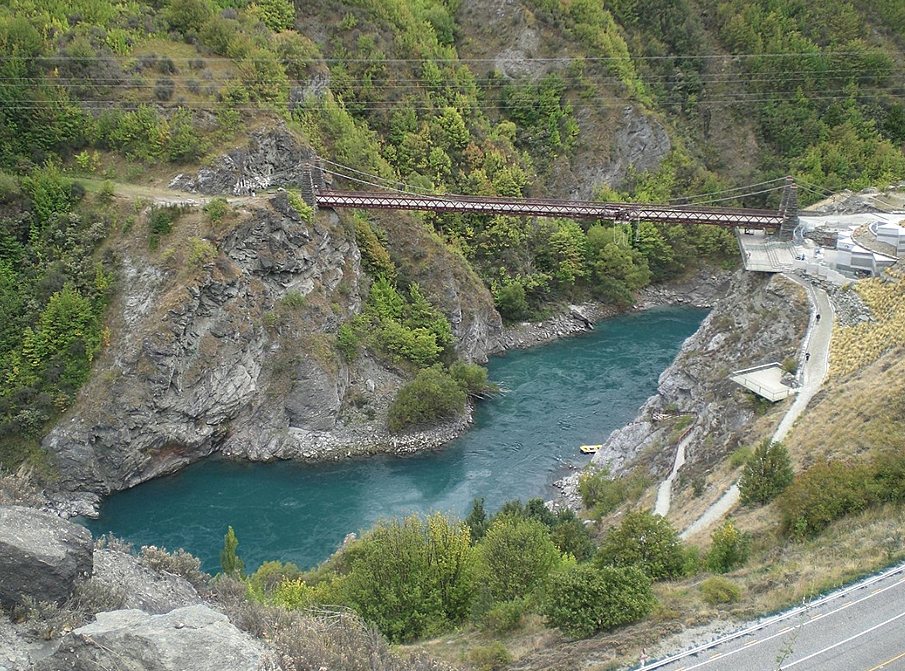
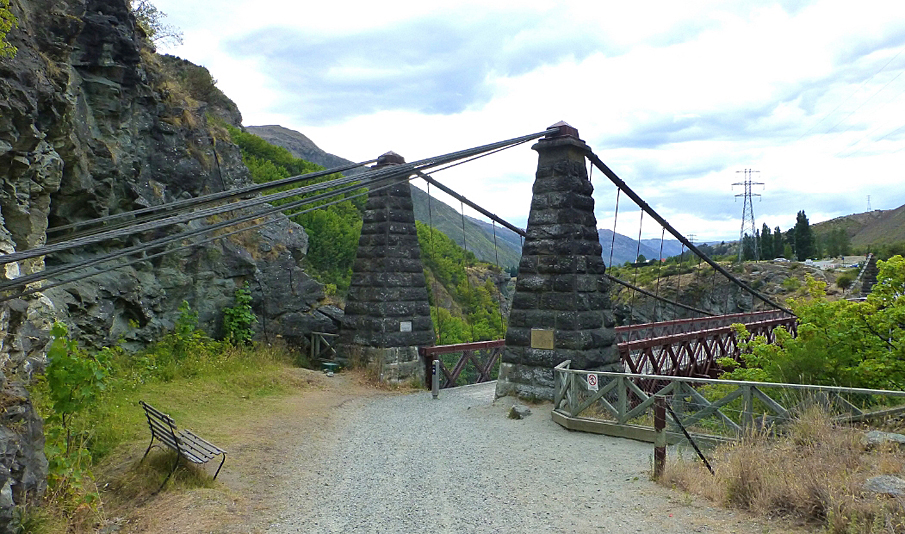
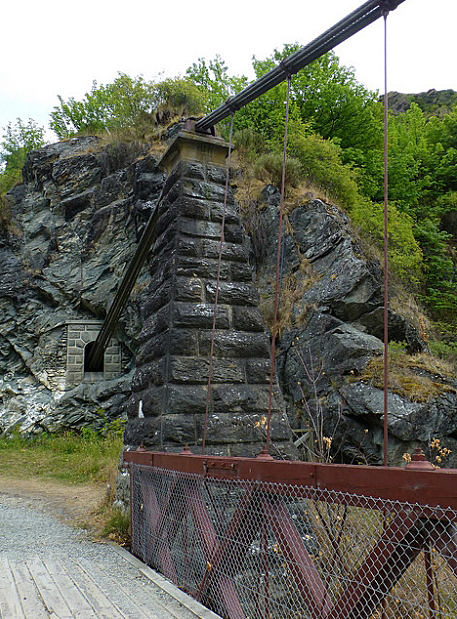
Extent includes part of the land described as Secs 63-64, Blk I Kawarau Survey District (RT OT15C/465, 87392), and part of the land described as Legal River (NZ Gazette 1983 p.2010-11), Otago Land District and the structural elements which form the Kawarau Gorge Suspension Bridge. The Extent excludes any structures associated with the bungy jumping operation. Refer to the extent map tabled at the Heritage List/ Rārangi Kōrero Committee meeting on 29 April 2021.
Legal description
Secs 63-64, Blk I Kawarau Survey District (RT OT15C/465, 87392) and Legal River (NZ Gazette 1983 p.2010-11), Otago Land District
Status
Listed
List Entry Status
Historic Place Category 1
Access
Able to Visit
List Number
50
Date Entered
26th November 1981
Date of Effect
26th November 1981
City/District Council
Queenstown-Lakes District
Region
Otago Region
Extent of List Entry
Extent includes part of the land described as Secs 63-64, Blk I Kawarau Survey District (RT OT15C/465, 87392), and part of the land described as Legal River (NZ Gazette 1983 p.2010-11), Otago Land District and the structural elements which form the Kawarau Gorge Suspension Bridge. The Extent excludes any structures associated with the bungy jumping operation. Refer to the extent map tabled at the Heritage List/ Rārangi Kōrero Committee meeting on 29 April 2021.
Legal description
Secs 63-64, Blk I Kawarau Survey District (RT OT15C/465, 87392) and Legal River (NZ Gazette 1983 p.2010-11), Otago Land District
Construction Professional
Name
Harry Pasley Higginson
Type
Engineer
Biography
No biography is currently available for this construction professional
Name
McCormick, J
Type
Builder
Biography
Contractor for the 1887 Roxburgh Suspension Bridge
Construction Details
Start Year
1963
Type
Other
Description
[Road over the bridge closed in favour of a modern alternative]
Start Year
1880
Type
Original Construction
Construction Professional
Name
Harry Pasley Higginson
Type
Engineer
Biography
No biography is currently available for this construction professional
Name
McCormick, J
Type
Builder
Biography
Contractor for the 1887 Roxburgh Suspension Bridge
Construction Details
Start Year
1963
Type
Other
Description
[Road over the bridge closed in favour of a modern alternative]
Start Year
1880
Type
Original Construction
Historical and Associated Iwi / Hapū / Whānau
Public NZAA Number
F41/426
Completion Date
17th March 2021
Report Written By
Andrew Winter
Information Sources
Astwood, 2011
Astwood, Karen (2011) ‘Kawarau Gorge Suspension Bridge - IPENZ Engineering Heritage Register Report’, Engineering New Zealand
Thornton, 1987
Thornton, J. (December 1987) ‘Anchored Above a Gorge’, Historic Places, New Zealand Historic Places Trust, pp 12-14
Timmins, 1996
Timmins, R. (1996) ‘The Kawarau Bridge’, The Queenstown Courier, Queenstown & District Historical Society, pp 7-11
Winter, 2014
Winter, Andrew (2014) The Queenstown Trail – Archaeological Assessment of Effects Report, Jackie Gillies and Associates
Other Information
This place was identified as significant under previous legislation with different information requirements. It remains significant under the current legislation. There is opportunity under our legislation and policies to add to this information. Further information about this place may be available from the Otago/Southland Office of Heritage New Zealand Pouhere Taonga. A fully referenced upgrade report is available on request from the Otago/Southland Area Office of Heritage New Zealand. Title held in fee simple. Land originally gazetted: NZG 1979 p.1605 Please note that entry on the New Zealand Heritage List/Rarangi Korero identifies only the heritage values of the property concerned, and should not be construed as advice on the state of the property, or as a comment of its soundness or safety, including in regard to earthquake risk, safety in the event of fire, or insanitary conditions.
Historical and Associated Iwi / Hapū / Whānau
Public NZAA Number
F41/426
Completion Date
17th March 2021
Report Written By
Andrew Winter
Information Sources
Astwood, 2011
Astwood, Karen (2011) ‘Kawarau Gorge Suspension Bridge - IPENZ Engineering Heritage Register Report’, Engineering New Zealand
Thornton, 1987
Thornton, J. (December 1987) ‘Anchored Above a Gorge’, Historic Places, New Zealand Historic Places Trust, pp 12-14
Timmins, 1996
Timmins, R. (1996) ‘The Kawarau Bridge’, The Queenstown Courier, Queenstown & District Historical Society, pp 7-11
Winter, 2014
Winter, Andrew (2014) The Queenstown Trail – Archaeological Assessment of Effects Report, Jackie Gillies and Associates
Other Information
This place was identified as significant under previous legislation with different information requirements. It remains significant under the current legislation. There is opportunity under our legislation and policies to add to this information. Further information about this place may be available from the Otago/Southland Office of Heritage New Zealand Pouhere Taonga. A fully referenced upgrade report is available on request from the Otago/Southland Area Office of Heritage New Zealand. Title held in fee simple. Land originally gazetted: NZG 1979 p.1605 Please note that entry on the New Zealand Heritage List/Rarangi Korero identifies only the heritage values of the property concerned, and should not be construed as advice on the state of the property, or as a comment of its soundness or safety, including in regard to earthquake risk, safety in the event of fire, or insanitary conditions.
Current Usages
Uses: Civic Facilities
Specific Usage: Bungy Jumping Operation
Uses: Civic Facilities
Specific Usage: Cycle Trail
Uses: Civic Facilities
Specific Usage: Historic or recreation reserve
Former Usages
General Usage: Transport
Specific Usage: Bridge/ Viaduct
General Usage: Transport
Specific Usage: Road
Web Links
description: Engineering NZ Heritage
url: https://www.engineeringnz.org/our-work/heritage/heritage-register/kawarau-gorge-suspension-bridge/
Current Usages
Uses: Civic Facilities
Specific Usage: Bungy Jumping Operation
Uses: Civic Facilities
Specific Usage: Cycle Trail
Uses: Civic Facilities
Specific Usage: Historic or recreation reserve
Former Usages
General Usage: Transport
Specific Usage: Bridge/ Viaduct
General Usage: Transport
Specific Usage: Road
Web Links
description: Engineering NZ Heritage
url: https://www.engineeringnz.org/our-work/heritage/heritage-register/kawarau-gorge-suspension-bridge/
Get the latest heritage news, features and events delivered
straight to your inbox.